

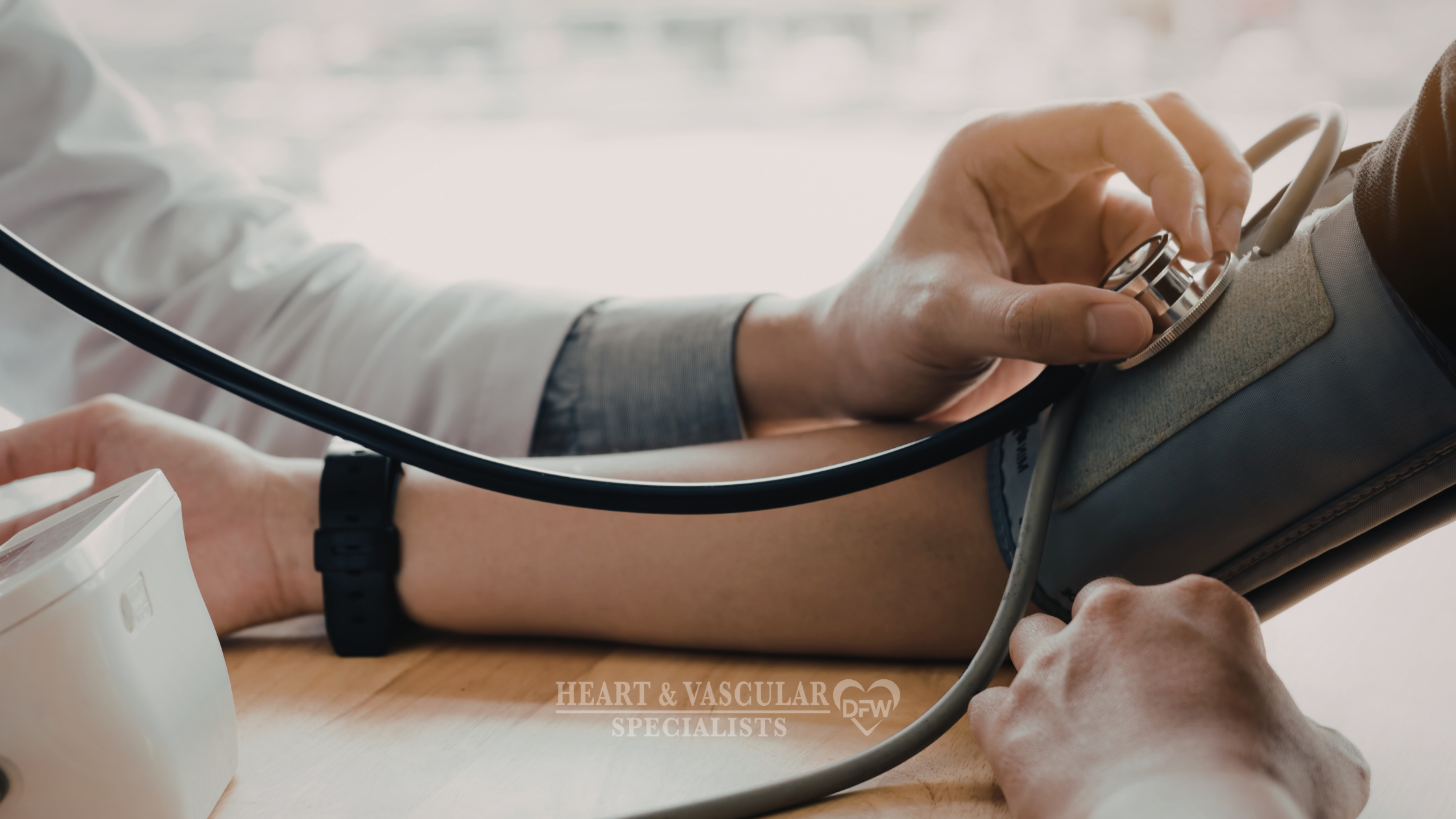
Symptoms of High Blood Pressure | A Patient Guide from Heart & Vascular Specialists DFW
High blood pressure, also known as hypertension, is one of the most common — and most dangerous — health conditions affecting adults today.
It impacts nearly half of all adults in the United States and remains the leading cause of heart disease, stroke, kidney failure, and vascular complications.
Many patients delay care because they don’t recognize the early symptoms of High Blood Pressure, assuming discomfort is simply stress, aging, or fatigue. At Heart & Vascular Specialists DFW, we frequently diagnose patients who felt completely “fine” — only to discover dangerously elevated readings that had already begun affecting their heart and blood vessels.
This guide will help you understand the most common symptoms of High Blood Pressure, why they often go unnoticed, and when it’s time to seek professional cardiovascular evaluation in the Dallas–Fort Worth area.
Table of Contents
What Is High Blood Pressure?
Blood pressure measures the force of blood pushing against your artery walls. When that pressure remains consistently too high, it damages blood vessels and forces your heart to work harder than normal.
Blood pressure is measured using two numbers:
- Systolic (top number): Pressure when your heart beats
- Diastolic (bottom number): Pressure when your heart rests
General guidelines:
- Normal: below 120/80 mmHg
- Elevated: 120–129 / below 80
- Hypertension: 130/80 or higher
Even slightly elevated readings can increase long-term cardiovascular risk.
Why High Blood Pressure Is Called the “Silent Killer”
One of the most dangerous aspects of hypertension is that it often causes no obvious symptoms at all, even when levels are dangerously high.
This is why many people never recognize the early Symptoms of High Blood Pressure until serious damage has already occurred.
High blood pressure silently damages:
- Heart arteries
- Brain vessels
- Kidneys
- Eyes
- Peripheral circulation

Common Symptoms of High Blood Pressure
While many people remain asymptomatic, others experience warning signs — especially as blood pressure remains uncontrolled.
Understanding these Symptoms of High Blood Pressure allows for early detection and life-saving intervention.
1. Frequent Headaches
Persistent headaches — especially in the morning — can be linked to elevated blood pressure.
They often feel:
- Dull or throbbing
- Located at the back of the head
- Accompanied by eye pressure
2. Dizziness or Lightheadedness
Feeling faint or off-balance may result from altered blood flow to the brain.
This is more common in:
- Older adults
- Patients with vascular disease
- Sudden blood pressure spikes
3. Shortness of Breath
High blood pressure forces the heart to pump harder, eventually weakening its ability to circulate oxygen efficiently.
This symptom may occur:
- During exertion
- When lying down
- At night
4. Chest Discomfort or Tightness
Uncontrolled hypertension accelerates plaque buildup in coronary arteries, increasing risk of angina and heart attack.
Chest pain should always be treated as an emergency.
5. Visual Changes
Hypertension damages small blood vessels in the eyes.
This can lead to:
- Blurred vision
- Vision loss
- Eye pressure
These are advanced Symptoms of High Blood Pressure and require immediate evaluation.
6. Fatigue and Brain Fog
Reduced oxygen delivery affects mental performance.
Patients often report:
- Chronic tiredness
- Poor concentration
- Memory issues
7. Nosebleeds and Facial Flushing
Although rare, very high blood pressure can cause:
- Frequent nosebleeds
- Facial redness
These are more often seen during hypertensive crises.
Who Is Most at Risk for High Blood Pressure?
You should be screened regularly if you have:
- Family history of hypertension
- Diabetes
- Obesity
- Smoking history
- High cholesterol
- Sedentary lifestyle
- Age over 40
- Chronic stress
Many patients experience Symptoms of High Blood Pressure without realizing their long-term risk.
The Link Between High Blood Pressure and Heart Disease
Hypertension is the strongest predictor of cardiovascular disease.
Over time it causes:
- Artery narrowing
- Heart muscle thickening
- Reduced blood flow
- Increased clot formation
This leads to:
- Heart attack
- Stroke
- Heart failure
- Kidney failure
- Peripheral artery disease
Managing blood pressure dramatically improves life expectancy.
How High Blood Pressure Is Diagnosed
At Heart & Vascular Specialists DFW, diagnosis includes:
- In-office blood pressure measurements
- Home monitoring
- 24-hour ambulatory testing
We also assess:
- Heart structure
- Kidney function
- Vascular health
Treatment Options for Hypertension
Treatment plans may include:
Lifestyle modifications
- Low-sodium diet
- Weight loss
- Physical activity
- Stress management
Medications
- ACE inhibitors
- Beta blockers
- Calcium channel blockers
- Diuretics
Early treatment prevents irreversible organ damage.

Why Choose Heart & Vascular Specialists DFW?
Patients trust us for:
- Board-certified cardiovascular specialists
- Advanced diagnostic tools
- Integrated heart and vascular care
- Personalized treatment strategies
- Proven patient outcomes
Are you experiencing any symptoms of High Blood Pressure?
When Should You See a Specialist
Schedule an evaluation if you:
- Experience any Symptoms of High Blood Pressure
- Have consistently elevated readings
- Possess multiple cardiovascular risk factors
- Want preventive heart screening
Schedule Your Blood Pressure Evaluation Today
If you live in Dallas, Fort Worth, or surrounding DFW communities, professional evaluation can prevent years of silent damage.
Booking is easy:
Frequently asked questions about high blood pressure and its symptoms:
Can high blood pressure go away on its own?
Is hypertension curable?
Do I need medication forever?
How often should I be screened?
Final Thoughts: Evaluating symptoms of high blood pressure
High blood pressure rarely announces itself loudly — but its consequences are severe.
The symptoms of High Blood Pressure are often subtle, inconsistent, and easily dismissed.
At Heart & Vascular Specialists DFW, early detection allows us to:
- Protect your heart
- Prevent strokes
- Preserve kidney function
- Extend your lifespan
Your heart doesn’t need to suffer silently. Proactive care saves lives.